

Every Women’s Day, you see the world celebrating their most inspiring female figures. Me, being a Bangladeshi girl, always wanted to see the similarly inspiring women of my own country be celebrated. However, I don’t see that enough.
That’s why I am here today, on the Women’s Day of 2025, to shed some light on some of the amazing heroes we had and seldom sing the praises of. They fought alongside men to carry the country forward and evolve our community into our current state – just like the Shieldmaidens of Norse mythology.
Countless Shieldmaidens have shaped our nation—some through revolution, others through resilience. While a few are recognized in history books, many remain in the shadows. So let’s talk about some of these remarkable women from different eras of our country’s evolution who defied oppression and left their mark..
1. Pritilata Waddedar (1911–1932) – Anti-British Revolutionary

Though her name appears in history books, she’s often overshadowed by male revolutionaries.
Pritilata Waddedar was one of the earliest female revolutionaries in Bengal’s struggle against British colonial rule. Born in Chittagong, she excelled in academics, earning a degree in philosophy. However, as the British severely restricted educational and professional opportunities for Indians, she was drawn toward the independence movement.
She joined the armed resistance led by Surya Sen, a revolutionary who orchestrated the famous Chittagong Armoury Raid. In 1932, at just 21, she led an attack on the European Club in Chittagong, a colonial establishment that barred Indians with a sign reading “Dogs and Indians not allowed.” Disguised as a Punjabi man, she and her team stormed the club. Though the attack succeeded, Pritilata was wounded and trapped. Refusing to be captured by the British, she swallowed cyanide and died, becoming the first woman martyr of Bengal’s revolutionary movement.
Despite her sacrifice, her name often gets lost amidst the male revolutionaries of the time. Yet, she remains a symbol of fierce patriotism and unwavering courage.
2. Kalpana Chakma (Born 1970, Disappeared 1996) – The Voice of the Voiceless

Kalpana Chakma was an indigenous rights activist from the Chakma community in the Chittagong Hill Tracts. Growing up in a region with ongoing tensions between indigenous groups and the Bangladeshi government, she witnessed firsthand the discrimination faced by her people. At a young age, she became a vocal advocate for the rights of indigenous women, challenging both the government’s policies and societal norms that suppressed her community.
In the early hours of June 12, 1996, Kalpana was abducted from her home—allegedly by military personnel. Despite numerous investigations, she was never found. Her disappearance remains one of Bangladesh’s most haunting unsolved cases, highlighting the vulnerability of indigenous activists.
Kalpana’s courage in speaking out against injustice continues to inspire indigenous rights movements, though her story is still not widely acknowledged in mainstream narratives.
3. Taramon Bibi (1957–2018) – Bir Protik Freedom Fighter

Taramon Bibi was one of the only two women to receive the Bir Protik title, awarded for bravery in the 1971 Bangladesh Liberation War.
Born into an impoverished family in Kurigram, she had no formal education. But when the war for independence broke out, she joined the Mukti Bahini (Liberation Army), serving as a combatant. Unlike many women who were limited to nursing or intelligence work, she fought in direct combat, engaging in gunfights against the Pakistani army.
After independence, her contributions were largely forgotten. She lived in obscurity for decades, working as a farm laborer. In the 1990s, her story was rediscovered, and she was finally awarded the Bir Protik honor. Taramon Bibi’s legacy reminds us that heroism often comes from the most unexpected places.
4. Maleka Begum (Born 1944) – Women’s Rights Activist and War Hero

Maleka Begum was a student at Dhaka University when the 1971 war broke out. Instead of fleeing, she took an active role in supporting the liberation movement. She worked in medical camps, assisted in transporting injured fighters, and played a crucial role in smuggling intelligence to the resistance forces.
After the war, Maleka saw that the contributions of women—many of whom were war heroines and survivors of sexual violence—were being erased from history. She became a historian and researcher, dedicating her life to documenting the struggles of women during and after the war. Her work has been instrumental in shedding light on the untold sacrifices of female freedom fighters.
Despite her relentless efforts, many of her accounts remain overlooked in mainstream war narratives.
5. Sufia Kamal (1911–1999) – Poet and Social Reformer
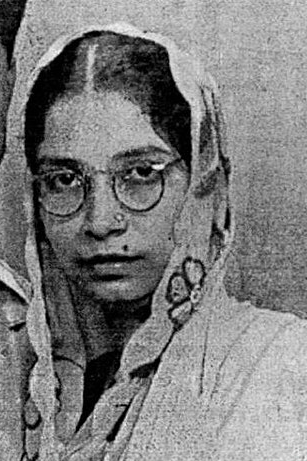
Sufia Kamal was not just a celebrated poet; she was a force of resistance against oppression, patriarchy, and dictatorship. In an era when Muslim women were rarely allowed to pursue education, she defied norms by becoming one of the most influential literary voices in Bengal.
Her poetry became a weapon against injustice. She actively participated in the 1952 Language Movement, fighting for Bangla to be recognized as the state language of East Pakistan. During Bangladesh’s liberation war, she provided aid to victims and documented the atrocities of the Pakistani army.
After independence, she founded the Bangladesh Mahila Parishad, the country’s most prominent women’s rights organization. Even in her later years, she fearlessly opposed military rule and religious extremism, despite facing numerous threats.
Though widely respected in literary circles, Sufia Kamal’s role as a relentless activist deserves more recognition.
6. Begum Rokeya (1880–1932) – The Visionary Feminist

Begum Rokeya was one of the earliest and most radical feminists in Bengal. At a time when women—especially Muslim women—were kept behind purdah, she dreamed of an equal society.
She founded the Sakhawat Memorial Girls’ School in Kolkata, where she fought to educate Muslim girls despite violent opposition. She also wrote Sultana’s Dream, a visionary science-fiction story where women ruled the world and men lived in seclusion.
Her writings and activism laid the foundation for future generations of feminists in Bangladesh. Yet, her radical ideas are still ahead of their time.
7. Runa Khan (Born 1958) – Empowering Bangladesh’s Forgotten Communities
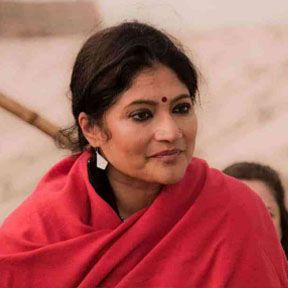
A lesser-known but incredibly talented woman is Runa Khan – the architect who founded the nonprofit organization called Friendship to transform lives in Bangladesh’s most isolated and climate-vulnerable regions. Established in 2002, it provides healthcare, education, and sustainable livelihoods to communities living on the ever-shifting river islands (chars), where government services are nearly nonexistent.
One of her most notable innovations is the floating hospitals, which bring essential medical care, including surgeries and maternal health services, to people who would otherwise have no access to treatment. Understanding the nomadic nature of these communities, she also introduced mobile schools that move with them, ensuring uninterrupted education for children.
Beyond healthcare and education, Runa Khan has pioneered climate resilience initiatives, helping vulnerable communities adapt to changing environments through sustainable agriculture, disaster preparedness, and vocational training.
Her work has received global recognition, including the Rolex Award for Enterprise, and Friendship’s model has been replicated in other countries facing similar challenges. Through her vision, Runa Khan is not just providing aid—she is empowering people to build self-sustaining futures despite adversity.
These women, from warriors to writers, revolutionaries to survivors, have shaped Bangladesh in countless ways. Yet, their stories are often whispered rather than celebrated. This Women’s Day, their legacies deserve to be heard loud and clear.
Discover more from The Free Magpie
Subscribe to get the latest posts sent to your email.

 The Free Magpie